
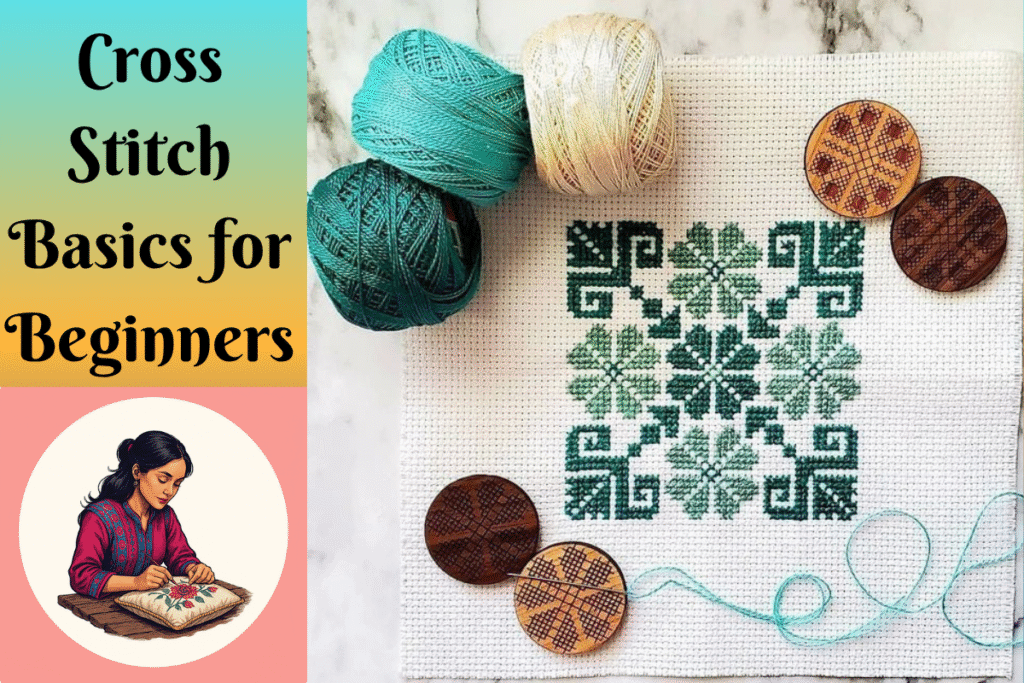
Have you ever looked at a beautiful piece of embroidery and thought, “I wish I could make something like that”? If so, you’re not alone. This guide to cross stitch basics for beginners will help you get started with one of the most relaxing and creative crafts out there. Cross stitch is easy to learn, satisfying to do, and a perfect hobby for anyone looking to unwind and create something meaningful.
In this ultimate step-by-step guide, you’ll discover the essential tools, patterns, and expert tips you need to begin your cross-stitching journey with confidence.
What Is Cross Stitch??
To begin with, cross stitch is a form of counted-thread embroidery. It uses tiny X-shaped stitches on fabric to create beautiful patterns or images. Generally, it’s done on evenweave fabric like Aida, which has a grid-like structure that makes it easy to count and stitch.
Interestingly, every design, no matter how complex, is made up of these small crosses. Consequently, even beginners can create stunning pieces with just a bit of practice.
Why Learn Cross Stitch Basics for Beginners?
There are several reasons to give cross stitch a try. Let’s take a look at a few compelling ones.
1. It’s a Calming, Meditative Hobby
First of all, cross stitching is a wonderful way to slow down and unwind. Since it requires focus and repetition, it naturally brings a sense of calm. In a fast-paced world, this can be incredibly soothing.
2. You Don’t Need Expensive Tools
Additionally, you don’t need a big budget to get started. Most cross stitch supplies are affordable and widely available. Therefore, it’s an accessible hobby for nearly everyone.
3. The Designs Are Endless
Moreover, cross stitch offers a world of creativity. Whether you prefer traditional motifs or modern minimalism, there’s a pattern for every taste. In fact, you can even make your own custom designs.
Essential Supplies for Cross Stitch Basics for Beginners
Before you begin stitching, you’ll need to gather a few simple tools. Fortunately, most of these are easy to find at craft stores or online.
- Aida Fabric: This fabric is ideal for beginners. Because it has evenly spaced holes, it makes counting stitches easy. It comes in various counts, such as 11, 14, or 18. Typically, 14-count Aida is a great place to start.
- Embroidery Floss: This is the thread used for stitching. DMC is a popular brand, known for its wide range of colors. Each skein contains six strands; usually, you’ll separate and use two strands at a time.
- Embroidery Hoop: Use an embroidery hoop to keep your fabric taut. This makes your stitches more even and your experience more enjoyable.
- Needles: Make sure to get blunt-tipped tapestry needles. Sizes 24 or 26 are best for 14-count fabric.
- Scissors: A pair of small, sharp scissors is perfect for trimming thread neatly and preventing fraying.
- Pattern or Chart: Choose a beginner-friendly pattern that includes a grid, symbols, and a color chart.
Understanding Cross Stitch Patterns
At first glance, a cross stitch pattern might look like a confusing grid. However, once you understand the basics, it becomes quite simple.
Each square on the pattern represents one stitch. Within the squares, you’ll find symbols or colors indicating which thread to use. Additionally, the pattern legend tells you which floss color matches each symbol.
To get started, always find the center of both your fabric and the pattern. This ensures your design is centered and prevents you from running out of space.
How to Start Cross Stitching: Cross Stitch Basics for Beginners
Now that you have your supplies, it’s time to stitch! Follow these steps to begin your first project.
- Prepare Your Fabric: Cut your Aida fabric, leaving at least two inches of margin on each side.
- Find the Center: Fold the fabric in half both ways and mark the center. Do the same with your pattern.
- Thread Your Needle: Cut about 18 inches of floss, separate two strands, and thread your needle.
- Make Your First Stitch: Bring your needle up from the back, insert it diagonally, and create a half stitch. Complete a row, then return to finish the full Xs.
- Secure Your Threads: Weave the thread under a few stitches at the back instead of tying a knot.
Helpful Tips for Cross Stitch Basics for Beginners
To make your cross stitch journey smoother, keep these tips in mind:
- Start small: Begin with a simple project to build confidence.
- Use good lighting: This reduces eye strain and helps you see the fabric clearly.
- Take breaks: Rest your eyes and hands regularly.
- Store your project: Use a clean pouch or box to protect your work.
- Track your progress: Mark off completed stitches or use a tracking app.
Common Cross Stitch Mistakes (and How to Avoid Them)
Even with preparation, beginners often make a few mistakes. Fortunately, they’re easy to fix or avoid with awareness.
- Miscounting Stitches: Double-check your count and highlight your pattern as you go.
- Uneven Tension: Aim for even, relaxed stitches that lie flat.
- Skipping the Hoop: Always use a hoop to maintain even fabric tension.
- Knots on the Back: Weave thread ends under a few stitches instead of knotting.
What’s Next After Learning the Basics?
Once you’re comfortable, there are many exciting ways to expand your skills:
- Learn backstitching for outlines
- Try French knots for accents
- Experiment with blending threads
- Add beading for texture
Furthermore, try stitching on evenweave or linen for finer detail, or use software to design your own patterns.
Finishing and Displaying Your Work
After completing your project, it’s time to show it off!
- Framing: Use a traditional frame or display it in the hoop.
- Sewing into gifts: Create pillows, bookmarks, or ornaments.
- Gifting: Handmade cross stitch pieces make thoughtful, personal gifts.
Before finishing, gently wash and press your piece face down on a towel to remove oils and wrinkles.
Final Thoughts
In conclusion, cross-stitching and cross-stitch embroidery are more than just hobbies; they offer a peaceful and fulfilling way to express creativity. Because it’s so easy to learn, almost anyone can pick it up and begin making something beautiful.
So, what are you waiting for? Gather your materials, choose a beginner-friendly pattern, and start stitching today. With each stitch, you’ll gain confidence and discover the joy of handmade art. For a deeper look into the traditional heritage and techniques, be sure to explore our blog post on Cross-Stitch Embroidery.